
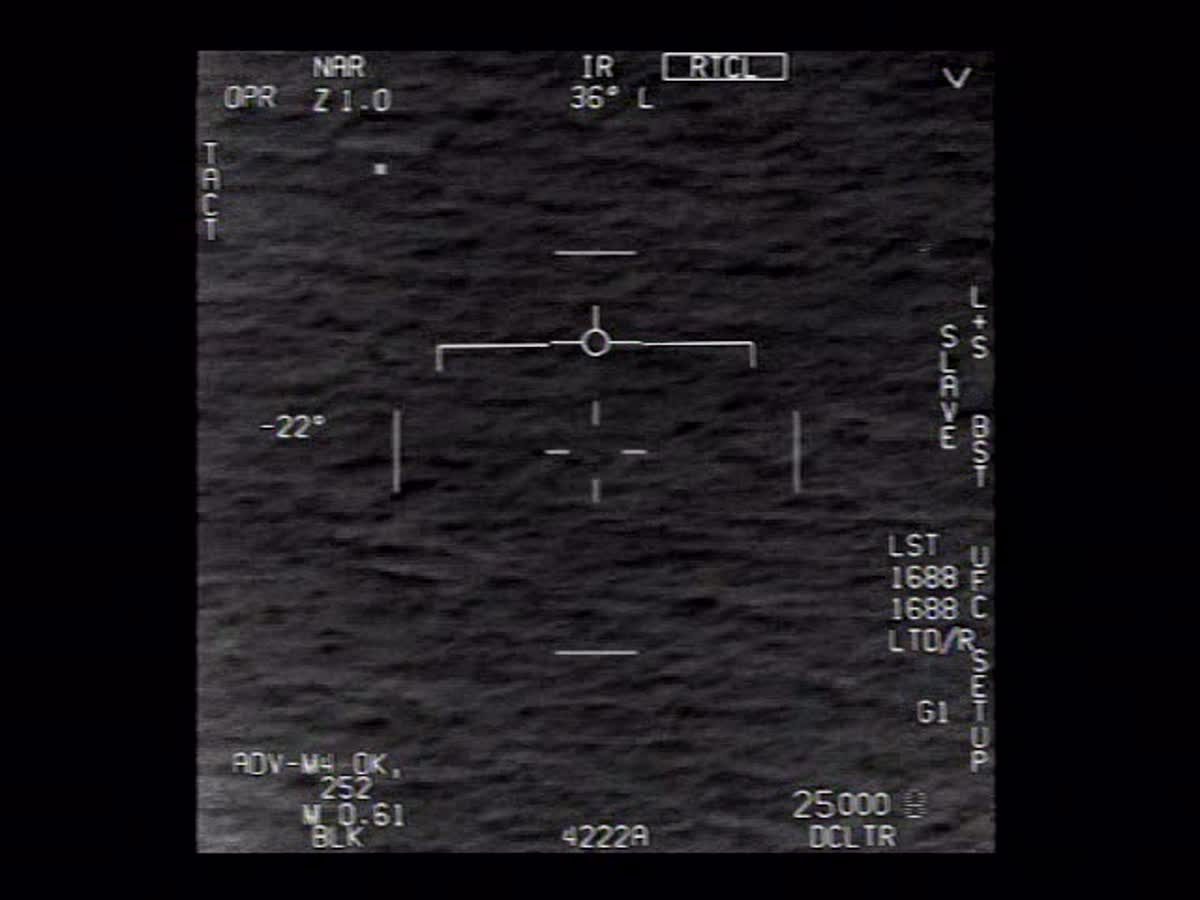
GoFast looks dramatic at first glance: a small object appears to skim across the ocean as a Navy sensor tries to lock onto it. The plain-English caution is that apparent speed on a screen is not automatically the object’s true speed.
What the video shows
The clip shows a target over water, tracked by a Navy aircraft sensor. The crew reacts as the system gets a lock. To a normal viewer, the object appears to move very fast across the ocean surface.
Plain-English reading
Here is the trap: a sensor display is not the same thing as standing still and watching an object move past you. The aircraft is moving, the camera angle is changing, the ocean is far below, and the sensor may make a distant object look like it is racing. That does not make the case unimportant. It means the video must be interpreted carefully.
Why it matters
GoFast matters because it shows why UAP work needs disciplined analysis. If someone overclaims it, the case becomes weaker. If someone dismisses it without looking at the source, they also miss the point. The valuable question is: what did the military system capture, and why was it not identified in the public record?
What is known
- It is one of the three historical Navy videos released by the Department of Defense in 2020.
- It is associated with Navy aircraft operations in 2015.
- The object was not publicly identified in the DoD release.
What is not settled
- The public video alone does not prove extraordinary speed.
- Distance, wind, camera angle, and aircraft motion matter.
- The public record does not close the case with a final identification.
Sources
Follow the trail.