
This Miami Valley item works best as a calibration piece, not a mystery piece. WDTN’s reporting said the lights people were calling in about on Jan. 7 matched Starlink, the SpaceX satellite constellation that routinely produces strings of bright lights and train-like formations. That makes the article useful for your site because it shows exactly how an unusual-looking sky event can generate UFO headlines before a simpler explanation catches up.
The short version
- When it happened: WDTN tied the report to Jan. 7 sightings over the Miami Valley.
- What people saw: a line of bright lights that looked strange enough to prompt UFO questions.
- What WDTN reported: the lights were Starlink satellites, not an unexplained craft.
- Why it fooled people: Starlink can resemble a coordinated formation when the satellites are still close together.
- Why it matters: explanation cases like this help readers compare future sightings against known patterns.
What the report appears to explain
WDTN’s description is short but clear: many people in the Miami Valley reported seeing strange bright lights, and the station identified them as Starlink. That matters because Starlink often produces exactly the kind of evenly spaced, bright, moving formation that people do not expect if they have never seen a satellite train before.
In practice, this kind of report is more valuable than it first appears. It gives your site a clean false-positive benchmark. When a future witness describes a string of lights moving in a line with no obvious wings or blinking aircraft pattern, this is one of the first comparisons readers should have in front of them.
What the image does — and does not — prove
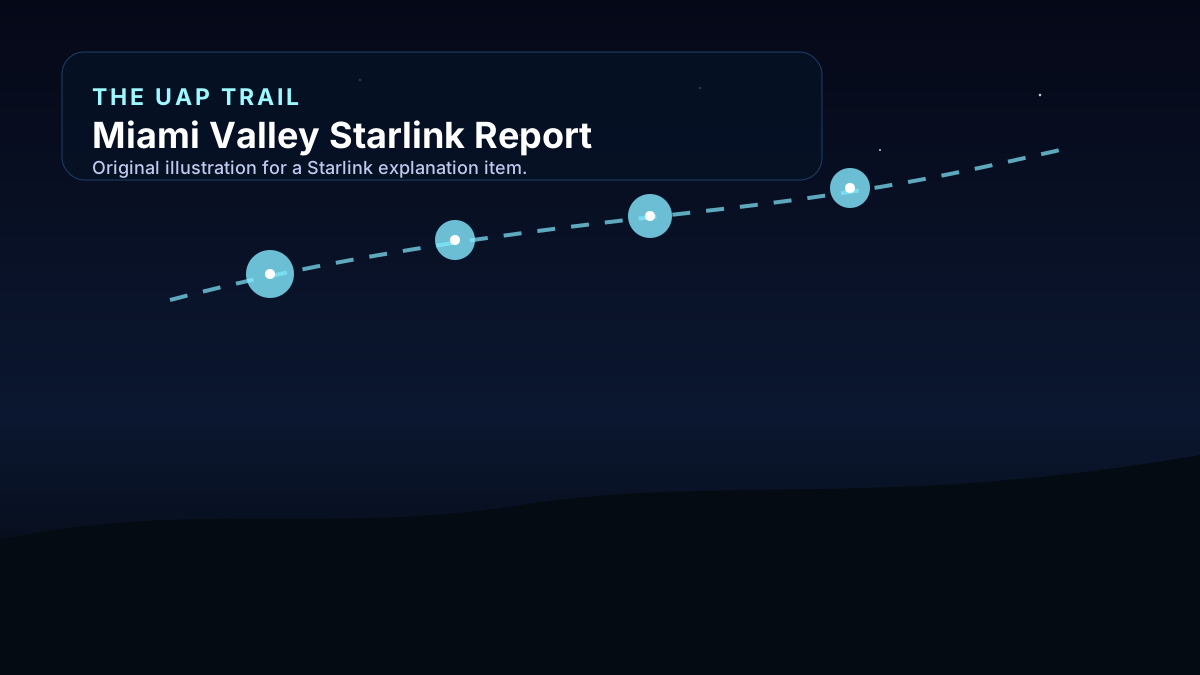
Because WDTN’s page blocked direct source-media extraction, this article uses an original illustration instead of presenting a source still as evidence. That means the explanation here rests on the station’s reporting and the known appearance of Starlink trains, not on a recovered image from the page itself.
Why this one is worth tracking
It belongs in the monitor because the best sightings archive is not just a pile of unresolved cases. It also needs good explanation cases. This is the kind of item that helps readers separate a structured satellite formation from something genuinely harder to classify.
Open questions
- Can the exact Starlink pass for the reported time be archived alongside this article later?
- Did local viewers capture video that more clearly showed the train-like spacing?
- How often do Miami Valley outlets end up fielding Starlink-related calls compared with other sky events?
- Would adding a side-by-side Starlink reference page improve future sighting triage on the site?