
The short version
- The Debrief reports on a preprint by Jacob Haqq-Misra and Ravi Kopparapu reviewing 112 UAP videos released under the PURSUE program.
- The core finding is cautionary: pixel motion across an infrared or electro-optical frame cannot be converted into real speed without range, field-of-view, platform-motion, and viewing-geometry data.
- Both researchers are described by the source as serving on the UAP Science Advisory Council, while Kopparapu notes his views are independent and not NASA’s official position.
What the records say
According to The Debrief, the Department of War has released more than 100 videos since May 8, 2026, showing unidentified objects in U.S. airspace and near military operations worldwide. The researchers reviewed 112 of those videos for what kinematic information could be extracted.
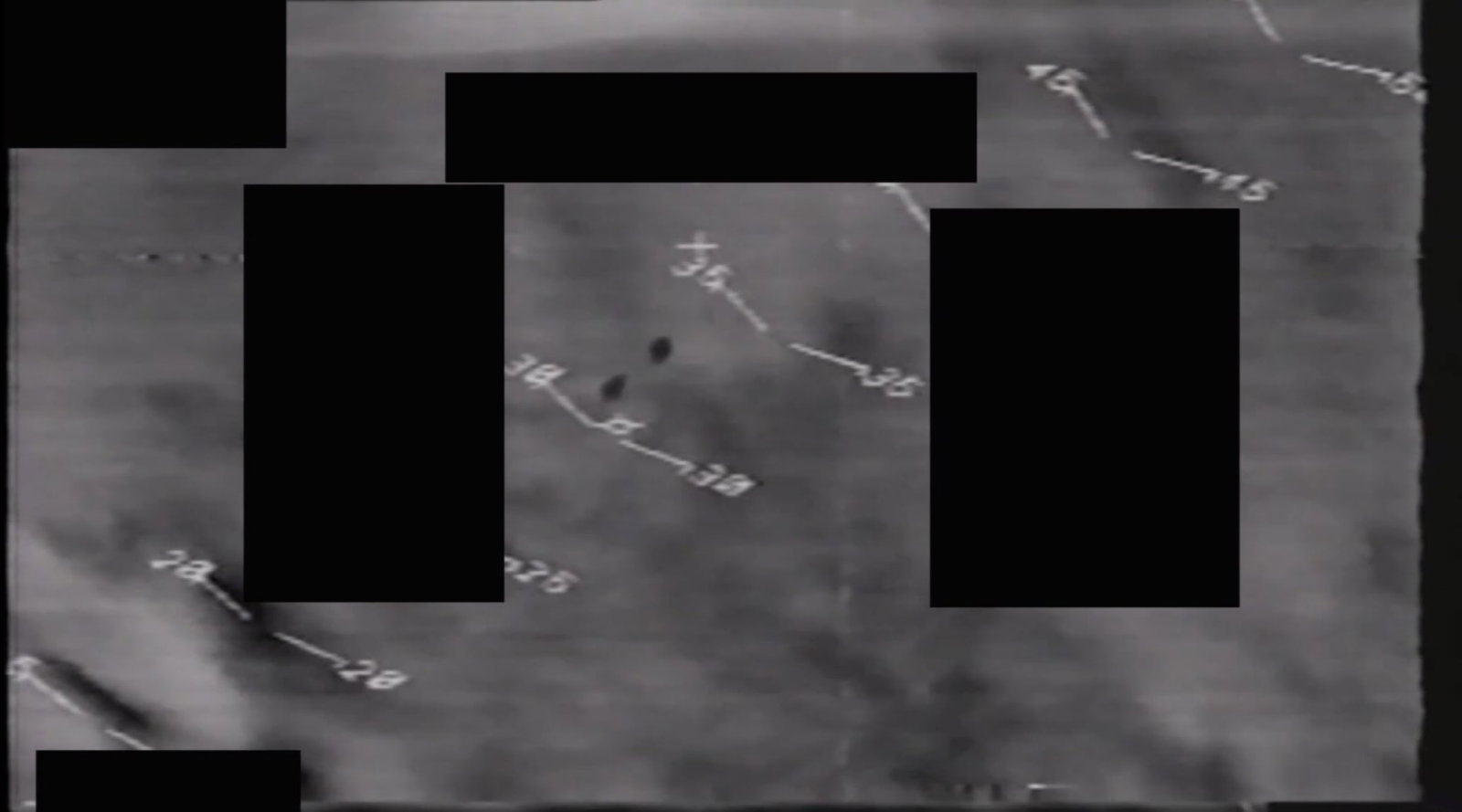
The article quotes Haqq-Misra saying “most of the useful quantities are redacted,” and quotes Kopparapu identifying range—the distance between object and platform—as perhaps the single most important missing quantity. Without it, a small nearby bird or artifact can look fast in frame, while a distant object can imply a very different physical speed.
The source also reports that field of view, aircraft trajectory, viewing geometry, and unredacted sensor overlays would make the releases more useful for independent science. The takeaway is not that every object is ordinary; it is that public clips alone often cannot support strong performance claims.
Media and records limits
The Debrief image and Department of War still frame preserve the records context, but single frames and redacted videos lack the full sensor package. Targeting-pod imagery can mislead when range, platform motion, and camera settings are hidden.
The source specifically separates scientific uncertainty from spectacle. The UAP Trail is carrying that posture forward: these videos remain worth reviewing, but claims about anomalous velocity need the missing measurements before they can be treated as evidence.
Why this one is worth tracking
This lead is worth tracking because it sets practical standards for future UAP releases: if agencies want outside review, they need to release enough measurement context for independent analysts.
It also gives the monitor a useful corrective against viral clips. A public UAP video can be important even when the most rigorous conclusion is that the release package is incomplete.
Open questions
- Will future PURSUE releases include range, field of view, platform trajectory, and viewing geometry in a safe public form?
- Can redacted sensor overlays be replaced by certified values in an official document without exposing sensitive systems?
- Which of the 112 reviewed videos remain scientifically interesting after ordinary range-and-geometry ambiguities are accounted for?
- Will the preprint change how agencies package video evidence for public and academic review?