
The short version
- CBN says the newly unveiled government site published 162 UFO/UAP-related files in its first release.
- The article cites examples including State Department cables, FBI documents, NASA crewed-flight transcripts, an FBI interview with a drone pilot who described an object with a bright light, and an Apollo 17 photo with three dots in a triangular formation.
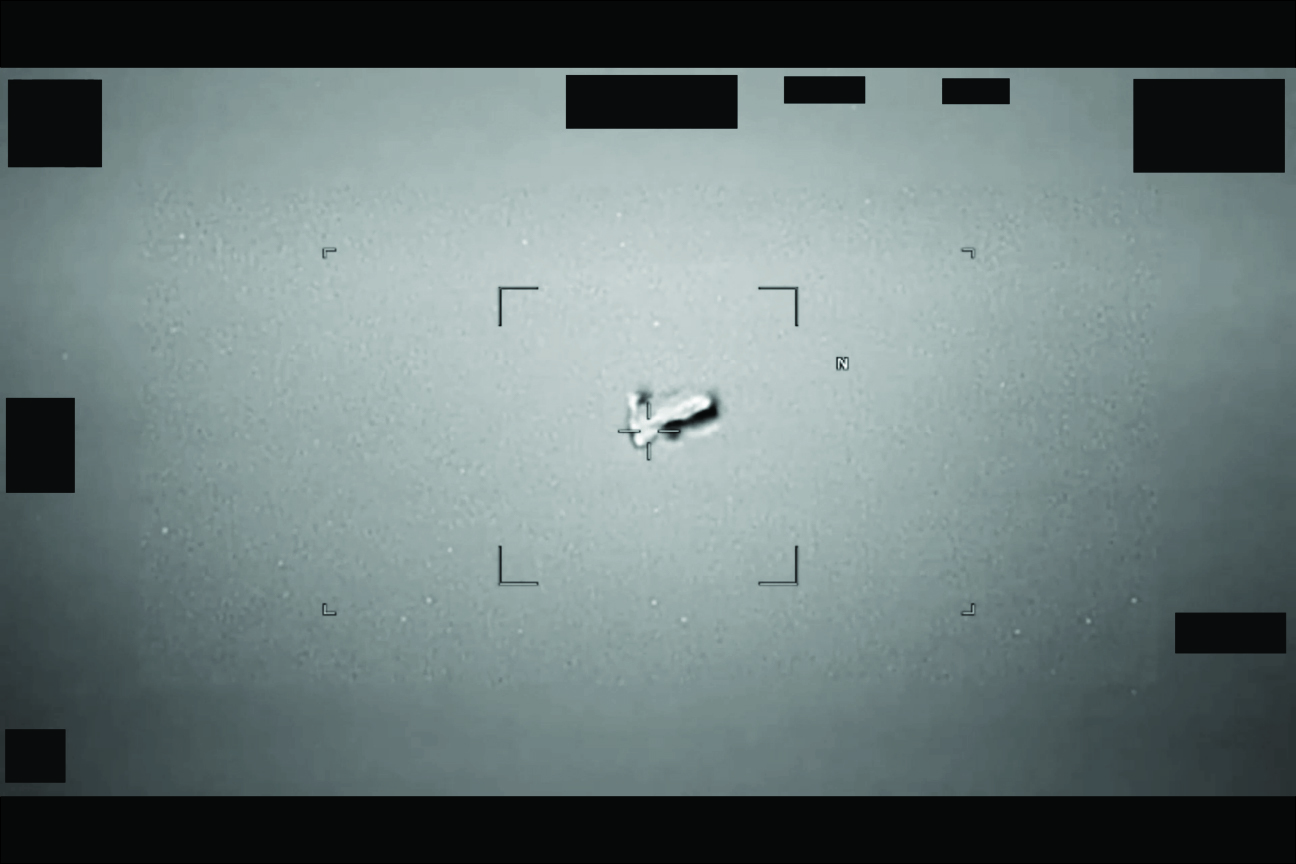
- CBN also uses a Pentagon image captioned as a 2024 U.S. Indo-Pacific Command report of a football-shaped UAP near Japan.
- The report repeats the Pentagon/AARO bottom line: the public can inspect files, but the government has not confirmed alien technology or alien life.
What the records say
The concrete record lead is the document release itself. According to CBN, the first release includes 162 files across diplomatic, FBI, NASA, and military channels, and the Pentagon framed the move as maximum transparency rather than a disclosure of conclusions.
CBN’s story highlights two examples useful to readers: an FBI interview involving a drone pilot who reported a bright-light object, and an Apollo 17-era NASA photograph described as showing three dots in a triangular formation.
The strongest caution in the source is also important: prior Pentagon/AARO review found hundreds of UAP incidents, but did not verify claims that the U.S. government recovered alien technology or confirmed alien life.
Media and records limits
The CBN article and embedded video summarize the release; they are not a substitute for reading each primary document in the government archive.
The Pentagon image near Japan is useful context because it is tied to a U.S. Indo-Pacific Command UAP report, but a captioned image alone does not establish distance, speed, altitude, sensor chain, or identity.
Religious or spiritual interpretations mentioned in the CBN piece are commentary, not evidence. The monitor tracks the records release and the cited UAP examples, while separating those facts from unsupported conclusions.
Why this one is worth tracking
This is a transparency marker: even if the files do not prove extraordinary claims, a public archive gives researchers a source trail to test against headlines and social-media claims.
The release may surface older documents that can be cross-referenced with AARO reports, NASA transcripts, FBI files, and military imagery already circulating in the public record.
Open questions
- Where is the permanent public URL for the full government files archive, and does it expose document metadata consistently?
- Which of the 162 files contain first-hand reports, original images, or sensor records rather than secondary summaries?
- Can the 2024 near-Japan UAP image be matched to a full incident record with platform, sensor, time, and location details?
- Will later releases add records that change the current Pentagon/AARO assessment?