
Image-analysis lead
Green dust storm on Mars source-image lead: what the NASA rover frame can and cannot show
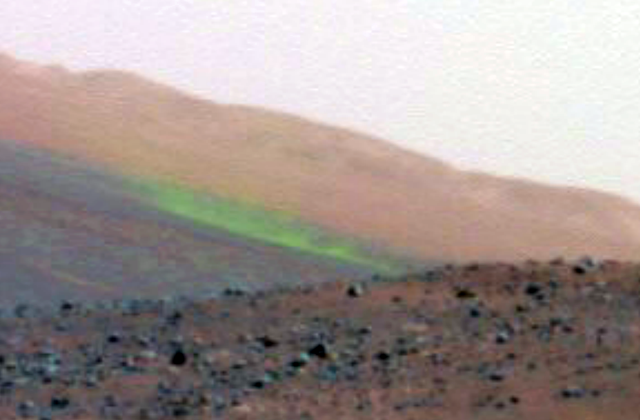
A new UFO Sightings Daily post points readers to a NASA/AREO Mars rover frame and highlights a greenish feature on the right side of the image. The useful part of the lead is the primary-image trail; the claims that follow need to be held at arm’s length until the original frame, color processing, terrain context, and mission metadata are checked.
The short version
- UFO Sightings Daily published the item on Aug. 14, 2026 and labels the sighting date as Aug. 13, 2026.
- The post links to an AREO-hosted Mars Exploration Rover Spirit image directory/frame and describes a green feature as a possible dust storm.
- The post speculates about water, life, and even radioactive dust; those conclusions are not established by the source image alone.
- Because this is a non-Earth image-interpretation lead, it was not added to the Earth sightings map.
What the report appears to explain
The source identifies the location as Mars and gives a NASA/AREO image link for the frame under discussion.
Its concrete observation is visual: a greenish area is visible in the posted crop/detail, and the author reads it as a possible dust storm.
The source then moves into interpretation, suggesting serpentine or water-related geology and later entertaining reader speculation about radioactive dust. The UAP Trail is preserving those claims as source claims, not as findings.
Media and records limits
The image needs primary-frame verification against the rover archive, including camera, sol, filter/color treatment, compression, and whether the green tint appears in calibrated products.
A single processed web image cannot establish active water, biology, radioactive dust, or artificial activity. Those require instrument data and independent geologic analysis.
The item remains useful as an image-analysis lead because it includes a primary-source path that readers can audit.
Why this one is worth tracking
Speculative Mars-image leads can spread quickly when a striking color feature is framed as discovery. Tracking this one keeps the primary image link attached to the claim while making clear that the extraordinary conclusions are unsupported.
Open questions
- Which exact rover product, camera filters, and calibration steps produced the visible color?
- Does the green feature appear in adjacent frames or other processed versions from the same sol?
- Is the feature a terrain/material color, an imaging artifact, a shadow/color-balance issue, or something else ordinary?