
Sightings monitor
DVIDS PR44 record posts Arabian Gulf infrared UAP video
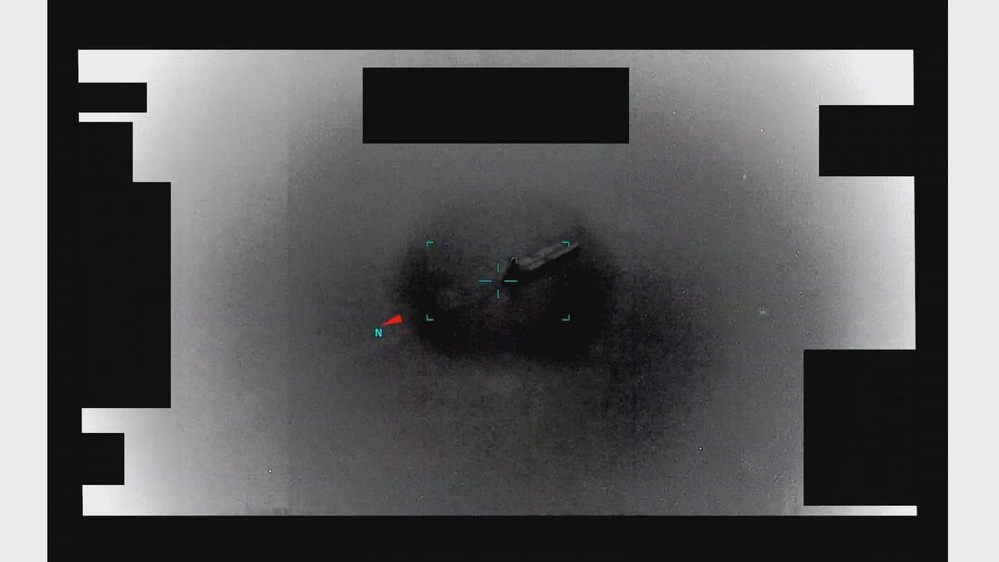
A Department of War/AARO video record now circulating through DVIDS gives researchers another concrete sensor-file lead from the Arabian Gulf: five minutes and eleven seconds of infrared footage, a tracked area of contrast, and almost no narrative context.
The short version
- Source: DVIDS record DOW-UAP-PR44, credited to the All-domain Anomaly Resolution Office.
- Reporting chain: United States Central Command submitted the report to AARO.
- Location/date context: DVIDS lists the video as Middle East, 2020, with the location marked undisclosed; a public archive mirror indexes the location as Arabian Gulf with approximate coordinates.
- Core record: five minutes and 11 seconds of infrared-sensor footage from a U.S. military platform.
- Important limit: the record says the reporter supplied no oral or written observation narrative, and its description is not an analytical conclusion about the event.
What the records say
DVIDS says U.S. Central Command submitted the UAP report to AARO and that the supporting material consists of 5:11 of infrared-sensor video from a U.S. military platform in 2020. The record's location field is listed as an undisclosed location, while public archive mirrors place the related record family in the Arabian Gulf.
The DVIDS description is careful and technical. It says the first thirty seconds show no content, then the sensor pans down and right to focus on an area of contrast. From 00:31 to 03:24, the sensor tracks that contrast area while cycling contrast and zoom levels, with brief bright white flashes across the frame.
From 03:25 to 04:23, the sensor cycles through reticles while continuing to track the area, and the contrast area briefly leaves the center of the sensor field of view. From 04:24 to 04:50, the field of view widens while tracking continues. At about 04:50, tracking stops and the contrast area exits the frame from the upper-left quadrant, followed by no content from 04:55 to 05:11.
What the media and records can and cannot show
This is a better-than-rumor lead because it is a primary-source military media record with a video ID, filename, date posted, length, and agency credit. It still has major limits. DVIDS explicitly says the reporter did not provide an oral or written description of the observation, and the published description should not be read as an investigative conclusion about validity, nature, or significance.
The infrared video can show a sensor tracking something or some area of contrast, but the public page does not provide enough context to identify altitude, range, platform, exact coordinates, environmental conditions, sensor mode, object size, or whether the contrast comes from an object, reflection, atmospheric effect, background contrast, sensor behavior, or another ordinary source.
Why this one is worth tracking
PR44 belongs to a growing set of official UAP video records now being indexed outside older congressional-hearing clips. Even when a case remains unresolved, a record with a source video, timeline, platform category, and release metadata can be compared against neighboring DVIDS/AARO entries, maritime and aviation context, and later official explanations if they appear.
Open questions
- What platform captured the infrared footage, and what sensor settings were active during the track?
- What exact location, range, altitude, and environmental conditions correspond to the Arabian Gulf/Middle East record?
- Are PR44 and nearby PR-series records part of the same operational collection, or separate reports from similar sensors?
- Will AARO or the Department of War publish an assessment that narrows possible explanations?