
This Saturday-night item reads like the evening counterpart to WHIO’s earlier morning Starlink story, and that makes it useful in a different way. The report says viewers across the Miami Valley saw a string of bright lights, contacted the newsroom, and got the same answer: Starlink. When the same pattern shows up repeatedly at different times, it becomes less of a one-off explanation and more of a standing reference point for the archive.
The short version
- When it happened: Saturday night, with reported visibility near 9:52 p.m.
- Where it was seen: across the Miami Valley.
- What viewers described: a line or train of bright lights moving through the sky.
- What WHIO reported: Starlink, not an unexplained object.
- Why it matters: repeated Starlink reports help establish a strong comparison library for future cases.
What the report appears to explain
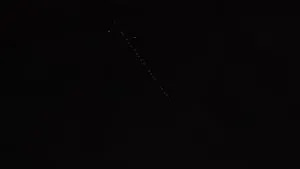
According to the WHIO/Yahoo version, several viewers contacted the newsroom after seeing straight lights in the sky. Meteorologist Nick Dunn identified the formation as Starlink, and a viewer video reportedly showed the familiar “string of pearls” look often associated with closely spaced satellites.
That description is important because it is one of the most reliable real-world cues in modern UFO reporting. When witnesses independently describe pearls, a train, or evenly spaced lights moving in formation, Starlink should be high on the list before anything more speculative.
What the image does — and does not — prove
The article image supports the local coverage, but it is the pattern description and timing that do most of the explanatory work here. Without those, a still image of bright lights could be interpreted too broadly.
Why this one is worth tracking
It strengthens your archive because it is not just another abstract “mystery lights” headline. It is a repeatable explanation pattern with local reporting, viewer input, and a specific visibility window attached to it.
Open questions
- Can the source viewer video be recovered or embedded later if it becomes accessible?
- How often do Miami Valley Starlink reports cluster after launches?
- Would readers benefit from a dedicated Starlink FAQ linked from these explanation pieces?
- Is there enough material now to create a site-wide “common satellite sightings” reference page?