
This is the kind of local-news explanation piece that belongs on The UAP Trail because it answers a real wave of public confusion with a specific, testable cause. WHIO reported that multiple viewers contacted the newsroom after seeing odd lights over the Miami Valley early Friday morning, and the station traced the sighting to Starlink visibility around 5:22 a.m. Instead of treating the story like a joke, it is more useful to treat it as a clean example of how quickly satellite trains can turn into UFO speculation.
The short version
- Time window: WHIO pointed readers to Starlink visibility around 5:22 a.m. on Friday.
- Location: the broader Miami Valley.
- What viewers reported: unusual lights crossing the sky before sunrise.
- Station explanation: a Starlink satellite train, not alien activity.
- Why it matters: it shows how predictable orbital objects can still look unfamiliar from the ground.
What the report appears to explain
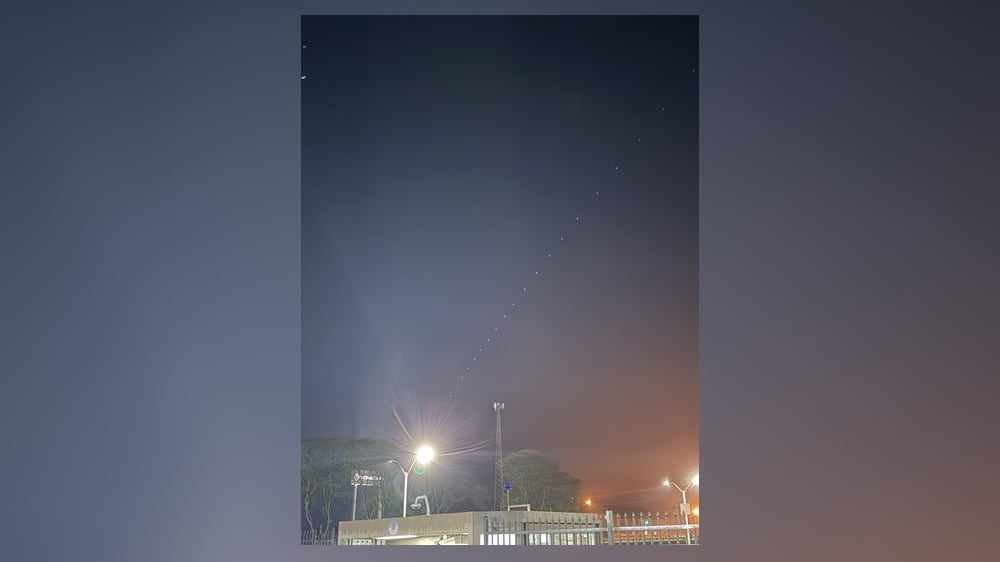
WHIO’s article is unusually straightforward. The newsroom says viewers asked about strange lights, then explains that the formation was a Starlink satellite train. The story also gives readers two useful context clues: SpaceX had recent launches, and the lights would have been visible at a specific time if conditions were right.
That specificity is what makes the article more than disposable local clickbait. A lot of sky-event stories stop at “mysterious lights.” This one actually tells readers what they were probably seeing and why it looked the way it did — as a string of pearls or a train moving across the sky.
What the image does — and does not — prove
The source image captures the visual flavor of the report, but it is not the reason the explanation is convincing. The stronger evidence is the timing and the match to how Starlink formations commonly appear shortly after launch or during favorable visibility windows.
Why this one is worth tracking
Explanation cases like this prevent the monitor from becoming a pile of unresolved headlines. They also help future readers compare a fresh report against a known pattern before jumping to a harder conclusion.
Open questions
- Can an archived Starlink pass map be added to the article later for stronger reference value?
- Did viewers send video that showed the classic evenly spaced train formation more clearly?
- How often do pre-dawn Starlink passes trigger newsroom calls in the region?
- Would a dedicated Starlink comparison explainer help reduce repeat false positives on the site?