
Sightings monitor
Colorado Springs records release adds two triangle UAP reports
A new local report out of Colorado Springs points readers back to the federal UAP file stream: two separate triangle-shaped sightings from 2023, both now circulating through Department of War/FBI release material rather than anonymous internet lore.
The short version
- Source: KRDO coverage of the Department of War's newest UAP file release, with Google News carrying the source lead.
- Reported location: Colorado Springs, Colorado.
- Reported period: two 2023 incidents; KRDO says the specific date for at least one report is redacted.
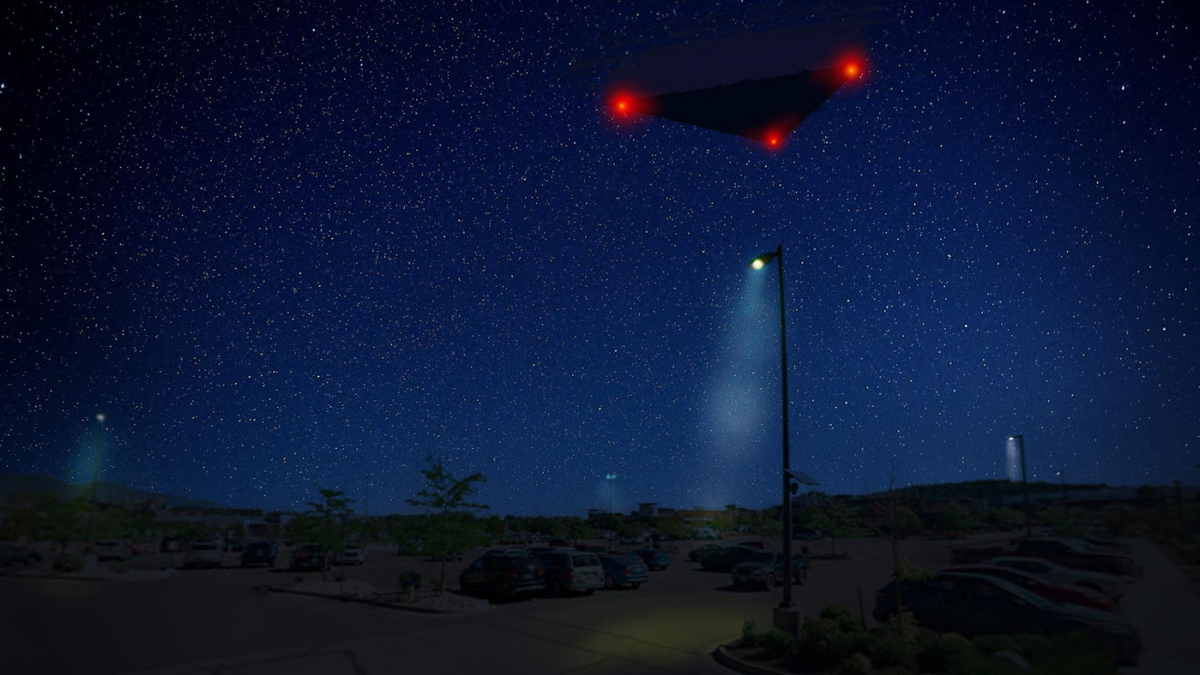
- Core claims: one former Department of War employee reported a dark translucent triangle; a second witness described a large triangle with red lights.
- Important limit: these are records-release summaries with redactions and source renderings, not a solved identification or a full public evidence package.
What the records say
KRDO reports that the newly released Department of War material includes a Colorado Springs account from October 2023 in which a former Department of War employee described seeing a dark translucent triangle. The coverage says officials created image renderings based on the witness description.
The same KRDO report describes a second 2023 Colorado Springs sighting. That witness was interviewed in October 2025 and was characterized as someone who frequently watches aircraft around Colorado Springs. According to the source summary, the witness first saw a bright star between roughly 8:00 and 9:30 p.m., then described a dark-gray cloud-like distortion phasing into view, a black triangular object, and a constant red light on the underside.
The second account also includes scale and behavior claims: the object was described as roughly as large as the parking lot where the witness stood, three to five stories thick, moving and banking before it was lost from view. KRDO says the interview was partly redacted to protect sensitive information, and also notes the witness called his wife afterward and she said his voice sounded robotic, as if there were electronic interference.
What the media and records can and cannot show
The public-facing source material is useful because it ties the story to named federal-release channels and local reporting, and because it gives concrete claims about location, time window, shape, color, motion, and redaction status. It does not, by itself, establish size, altitude, distance, propulsion, origin, or whether the witnesses saw aircraft, balloons, drones, atmospheric effects, classified activity, sensor or perception errors, or something genuinely unresolved.
The renderings should be read as witness-description aids. They can preserve how the witnesses characterized what they saw, but they are not photographs of the objects and cannot substitute for original timestamps, raw imagery, flight-track data, weather records, or complete unredacted interview files.
Why this one is worth tracking
Colorado Springs keeps recurring in the federal UAP release stream, including earlier coverage of a 2022 Cheyenne Mountain-area report by Army service members. That does not prove a pattern of extraordinary craft, but it does make the location useful for follow-up: military airspace, training corridors, mountain terrain, local witness density, and federal records can all be checked against each other if more files are released.
Open questions
- Will the underlying FBI/Department of War documents become available in a less redacted form?
- Were aircraft, drones, balloons, satellites, or training operations active over Colorado Springs during the reported windows?
- Can the witness-rendering files be tied to original interview document numbers and metadata?
- Was the reported voice/electronic interference claim documented anywhere beyond the witness interview summary?