
Most UAP headlines live and die on a blurry clip and a breathless retelling. The Anoka case is different. What makes it worth slowing down for is not just the video, but the paper trail: police personnel, a formal submission path, and an FBI/National Archives record that preserves how the sighting was described after the fact. That is enough to take the report seriously. It is not enough to oversell it.
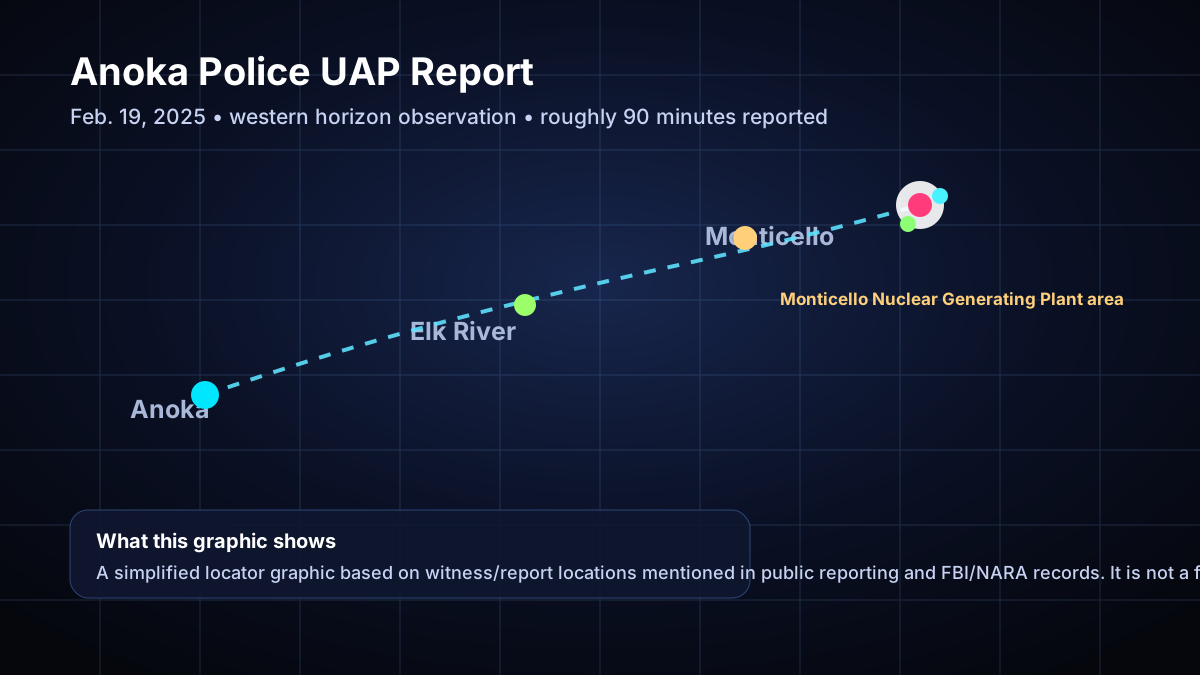
The short version
- When it happened: the report places the sighting on Feb. 19, 2025, beginning around 1:17 a.m.
- Who reported it: Anoka Police Department personnel, with local reporting indicating at least one sworn officer was directly involved.
- How long it lasted: roughly an hour and a half, long enough for repeated observation rather than a quick glance.
- What stood out: the object was described as spherical or orb-like, with rapidly shifting multicolored light.
- What evidence exists: a short phone-through-binoculars clip and a federal record describing the event.
- What remains unresolved: the released material does not identify the object or settle on a conventional explanation.
What the records say
Read narrowly, the Anoka file is a witness report with unusually specific institutional context. The FBI import form says police department personnel watched an object low in the western sky under clear conditions, used binoculars during the observation, and followed it for about 90 minutes. That alone does not validate the estimated altitude or distance, but it does separate the case from a fleeting social post with no documented chain behind it.
The language used to describe the object is the part most readers will remember. The record and follow-up reporting describe fast-changing light patterns, including the multicolor “tie-dye” look repeated in local coverage. Witnesses reportedly did not think they were looking at a normal aircraft or a routine satellite pass, and one account said the object appeared to move in a way that looked like a stone skipping across water. Those are reported impressions, not measurements, but they are still central to why the case drew attention.
The reporting path matters almost as much as the visual description. Public coverage says the information moved through Americans for Safe Aerospace and into an FBI field-office channel before appearing in the broader records release. That does not convert the sighting into proof of anything extraordinary. What it does mean is that the claim did not remain trapped at the rumor stage; it entered a documented records process that can be cited, checked, and compared against other released material.
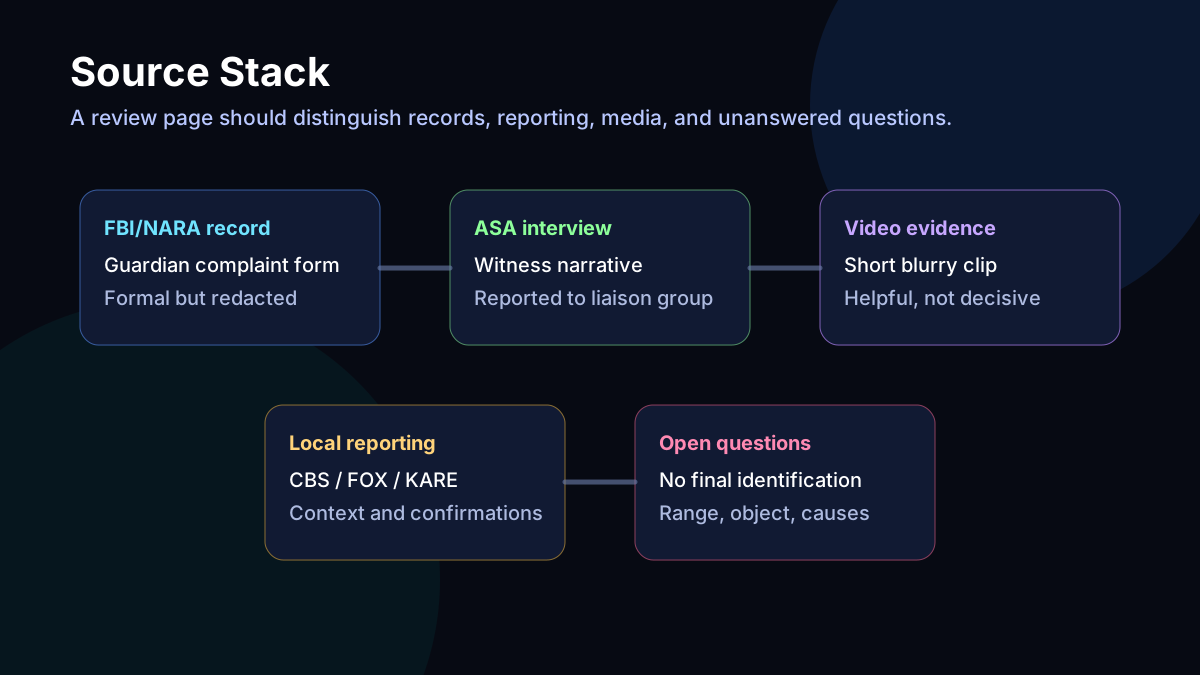
What the video does — and does not — prove
The video gives the Anoka story a public artifact, but it is still a weak stand-alone piece of evidence. It is short, soft, and recorded through binoculars, which makes scale, motion, and brightness hard to judge. In practical terms, the clip is useful because it confirms that witnesses tried to document what they were seeing. It is not useful as a clean instrument for determining size, range, altitude, or origin.
Why this one is worth tracking
Anoka stays on the board for a simple reason: it sits in the middle ground between hype and dismissal. It is stronger than a random viral clip because named institutions, released records, and local reporting all exist. But it is weaker than a solved case or a deeply documented incident because the public evidence is still thin and the key estimates remain witness-based.
That combination is exactly why the case matters. It is the kind of report that can be responsibly discussed without pretending it proves an exotic answer. The cleanest description is also the least dramatic one: this is a documented police-linked sighting with a federal records trail, a blurry supporting clip, and no confirmed explanation in the released material.
Open questions
- Can the original released video file be traced directly from the National Archives record rather than through local-news copies?
- Were aircraft, drones, balloons, satellites, Starlink passes, or weather phenomena checked against the reported time and direction?
- What exactly was redacted from the FBI record, and does any withheld material affect the sighting assessment?
- Can the reported 50-mile distance and 10,000-to-30,000-foot altitude estimate be independently supported?
Sources
- FBI/NARA PDF: “Observation of UAP by Anoka Police Department personnel”
- CBS Minnesota: Newly declassified FBI documents detail UFO sighting by Anoka officers
- FOX 9: FBI documents detail reported UFO sighting involving Anoka police officers
- FOX 9 YouTube video: Suspected UFO sighting involving Anoka police officers
- National Archives: Record Group 615, Unidentified Anomalous Phenomena Records Collection